
During six beautiful days in Kruger recently, I reflected again on the never-ending work that SANParks does to maintain, protect and restore areas of natural wildness in our country.
I remember hearing not too long ago about their habitat rehabilitation initiative at the Boulders Penguin Colony in Simon’s Town. In partnership with the SANParks Honorary Rangers, they planted 1,000 Tetragonia decumbens (dune spinach) shrubs that had been germinated from seeds collected at the site. Through binding sand dunes and reducing erosion, the plants create favourable conditions for the growth of other indigenous plant species that support other coastal wildlife.
SANParks is not alone in their biodiversity conservation and ecological restoration efforts. For example, with the support of the Botanical Society of South Africa, experts at the University of Pretoria have been reintroducing thousands of the critically endangered Magaliesberg aloe (Aloe peglerae) to the north-facing slopes of the Magaliesberg mountains to the north of Pretoria – the only place they grow, apart from a small population around Krugersdorp.
If you are lucky enough to live outside or on the fringe of a large city and feel inspired to do your bit for our wildlife, Random Harvest’s grassland restoration in Muldersdrift is a wonderful example of what can be achieved with passion and interest, even if not in a strictly scientific manner. Click here for a fascinating and detailed article about the project.
IN THE GARDEN
I think we garden all year in anticipation of late spring. Our garden has bounced into life beyond my wildest expectations. The abutilons, deutzias, weiglia, and philedelphus are exploding with buds and flowers, and the xylotheca bush is in full bloom. Happily, it looks like at least some of the smaller perennials have managed to survive the onslaught of the dogs over winter.
After much soul-searching and debate, we decided to dig up and relocate the beautiful Loropetalum chinense which has flourished in the front garden for probably 10 years but had started interfering with the security beams. It’s still too early to tell whether it is going to survive, but I walk past it every day encouraging it to grow, grow, grow!
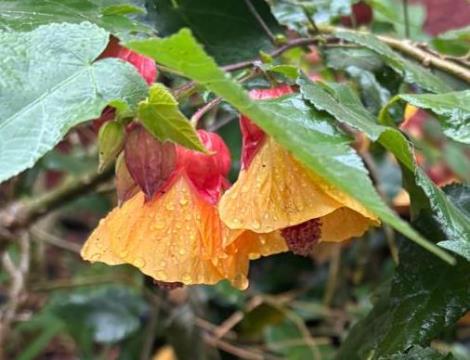
Abutilon Linda Vista

Oenothera speciosa alba
.jpg)
Weigelia florida aura
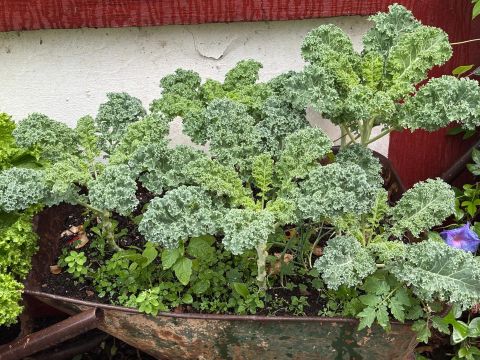
And an old wheelbarrow being put to good use for the kitchen
IN THE NURSERY
Click here to view all the plants in this newsletter on one website page.
Indigenous plants
The deciduous snowball bush, Viburnum opulus Sterile, greets spring with a stunning display of large flat-topped clusters of white flowers, and equally attractive maple-like three-lobed leaves. This strong rounded shrub grows around 3m high, and is happy in sun or semi-shade, as long as the soil is kept moist. We have plants in 10 litre bags.
Freylinah visserii is an upright evergreen shrub that grows approximately 3m high and has bell-shaped cerise pink flowers in spring. Indigenous to the Strandveld region in the Western Cape, it is classified as threatened in the IUCN’s Red Data Book. Plant in full sun and dry, sandy soil.
A spring newsletter cannot fail to mention the gorgeous Ochna serrulata (affectionately known as the Mickey Mouse bush due to the shape of its fruits) which has lovely yellow flowers at this time of year. This slow-growing approximately 2m high shrub is evergreen and semi-hardy, and is happy in sun to semi-shade.
The well-shaped evergreen shrub Polygala myrtifolia alba reaches an average height of 2m, and offers you clusters of white flowers for the vase throughout the season. It does well in sun or shade, and responds well to being pruned back to shape.
Rothmannia globosa (September bells) is an upright approximately 3m high evergreen shrub with glossy foliage and fragrant cream bell-shaped flowers in spring followed by round fruits. Loved by butterflies and bees, it is happiest in semi-shade.
The large clusters of small scented yellow flowers of Senecio tamoides variegata put on a show in autumn, attracting butterflies to the garden. This hardy evergreen fast-growing climber has frilly creamy variegated leaves and grows around 3m high. Plant in semi-shade.
Exotic plants
Cistus x skanbergia is a water wise compact mound-forming shrub which wants a sunny position and dry sandy soil. Evergreen and hardy, it has wavy-edged grey-green leaves, and pale pink cup-shaped single flowers from spring to summer. Loved by bees, butterflies and birds, it grows on average 90cm high.
The evergreen rosette-forming Filipendula vulgaris has finely divided fern-like leaves and sprays of white flowers in summer. This is a very hardy approximately 70cm high perennial that likes sun to semi-shade. The plants in the nursery are currently in bud.
If you like a touch of drama in the garden, you can’t do better than the Mexican flame vine, Pseudogynoxys chenopodioides. The dazzlingly orange daisy-like flowers of this fast-growing evergreen climber attract butterflies and bees from summer to autumn. Growing about 3m high, it wants full sun, and is best planted up a trellis or obelisk.
As a bog plant, the very hardy Scirpus zebrinus wants full sun but moist soil. This 1.5m tall rush has leafless stems with vertical cream and green stripes – from whence its common name of zebra rush. A deciduous plant, it should be cut back hard in autumn to retain the stripes.
SNIPPETS
The open gardens around the country at this time of year are too many to list here! Make sure you tap into your gardening networks and favourite social media platforms in order not to miss out.
FUN FACT
Quinton Bean and Andy de Wet of the Aloe Farm near Hartbeespoort donated 8,000 one-year-old aloe seedlings to the University of Pretoria’s aloe peglerae project in July 2023.
Happy gardening!
Leoné
082 482 0257