
In neglected, even deserted, farmyards along rural South African roads, you will often spot an old kan nie dood clump of Cannas. Straggly to be sure, but surviving with no watering, feeding, or dividing. Could such depressing scenes be the reason why some gardeners have an aversion for a plant that actually offers reliable colour and structure? Or are they put off by the popularity of mass Canna plantings for public parks (precisely because of their resilience and reliability!)?
Indigenous to the tropical and semi-tropical parts of North and South America, Cannas were not well-known to European botanists until the 1500s. It was in the Victorian era (mid- to late 1800s) that they became popular, with gardeners putting their flamboyant blooms and lush banana-like leaves to good use. Most of the hundreds of cultivars with shorter habits and novel flower forms and colours that were created in the period up to the 1910s were lost in the course of the world wars, but hybridisation has continued apace since then.
In South Africa’s climate, Cannas provide bold, long-lasting colour for up to seven months a year. Regular deadheading keeps them looking fresh and manicured, and cutting taller varieties back to knee height after the main flush can trigger a strong second show a month or two later.
Single-colour mass plantings do tend to evoke municipal park vibes. Instead, channel the fearless spirit of Christopher Lloyd at Great Dixter by confidently interplanting Cannas among perennials for dynamic, joyful combinations. A small cluster of Cannas in a large pot also adds instant focal interest and can beautifully amplify your overall colour scheme. And don’t be afraid to mix different varieties! They “clash” in the most marvellous way because of the compatible colour tones in their genetics.
By October, we will have some lovely varieties in the nursery. Watch this space!
(A big thank you to Barry Slabbert for his inputs for this newsletter.)
I
We have been making use of the garden's winter slumber to get some very necessary renovations and repairs done – including tearing down and replacing a wall between the cottage and the nursery which must have been all of 60 years old!
Although things have been rather chaotic, the changes have left us with new spaces to get creative with planting - and loads of useful bricks for paving the nursery.
.jpg)
A new vibracrete wall
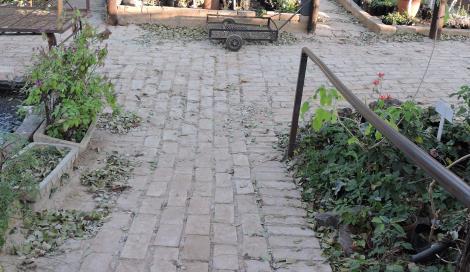
New paving in the nursery
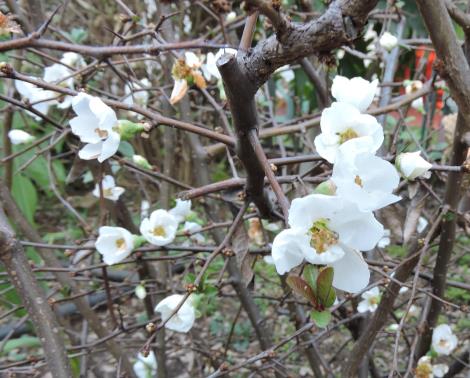
The reliable prettiness of winter-flowering Chaenomeles superba

A splash of colour from the marmelade bush (Streptosolen jamesonii)
IN THE NURSERY
Click here to view all the plants in this newsletter on one website page.
Indigenous plants
The approximately 3m high Bauhinia galpinii is a robust sun-loving evergreen trailer with lobed leaves and brick-red flowers that attract butterflies from spring to summer. Use it as a screen or to cover a pergola, or prune it into a gorgeous shrub. We have plants in 10l bags.
Cyrtanthus breviflorus (the yellow fire lily) is a hardy evergreen bulb that grows in marshy areas and multiplies rapidly. It has straplike leaves and scented bright yellow tubular flowers, mainly in spring. Plant in sun to semi-shade, and keep the soil moist.
The rare Metarungia pubinervia was only discovered in the Kranzkloof Nature Reserve in Kloof in 2000! This well-shaped evergreen shrub has quilted dark green leaves, and tubular red flowers that are produced on the upper side of the branches, attracting sunbirds and insects from winter to spring. It grows on average 1.5cm high and wants shade to semi-shade.
Indigenous to the region from Transkei to KwaZulu-Natal, Pavetta revoluta is a gorgeous smooth-barked evergreen tree with oval leaves and dense clusters of white flowers that attract bees and butterflies to the summer garden. It is happiest in semi-shade and reaches an average height of 4m, but take note – it is a slow grower!
Exotic plants
The gorgeous bowtie vine Dalechampia dioscoreifolia is a rare vine with heart-shaped leaves and showy purple flowers from spring to autumn. Evergreen and semi-hardy, it reaches an average height of 5m, and wants full sun and acid soil.
Fuchsia arborescens is another plant which needs acid soil. This is a fast-growing approximately 2m high hardy evergreen shrub with bright green lance-shaped leaves and panicles of small rose to magenta flowers from winter to summer, followed by edible purple berries. Plant in semi-shade.
Helleborus orientalis will be no stranger to the nostalgic gardener. This very hardy clump-forming perennial with leathery dark green palmate leaves grows around 45cm high and has nodding saucer-shaped flowers from winter to spring that range between cream, purple and green in colour. This is a good plant for shady, even deeply shaded, parts of the garden.
The perennial sweet pea Lathyrus latifolius is an approximately 2m high deciduous climber with winged stems, blue-green leaves, and racemes of pale pink/lilac or white flowers from summer to autumn. Happiest in sun to semi-shade, it is well suited to a trellis or an arch.
SNIPPETS
With winter rather far from over, the gardening world is still somewhat quiet. I am sure we will have some upcoming festivals, open gardens and the like to feature in the August newsletter.
FUN FACT
Cannas have been cultivated as a food crop for thousands of years, and can be eaten raw or baked like a potato. The high quality starch in the rhizomes is valuable for processed foods because it does not break down during cooking and freezing.
Happy gardening!
Leoné
082 482 0257