
There are few stories I find more inspiring and uplifting than the restoration of The Wilds thanks to one individual’s vision and willingness to take action all on his own.
When artist James Delaney first ventured into this green space close to Hillbrow and downtown Johannesburg, it was badly overgrown and considered a haven for criminal activity. Even the small City Parks team who worked there was too afraid to venture deeper into the park than the lawns they had mowed and paths they had swept for decades! But James fell for the magnificent trees and the potential he saw, and soon started taking clippers along on his walks to tidy up one little something at a time.
Like Topsy, things just grew from there. It is impossible for this newsletter to cover every detail of the extraordinary journey since James’s first foray into the park in 2014. You can get the whole heartwarming story in his own words here.
A major milestone was Mandela Day 2017 when James installed 67 metal owl sculptures in the park, and hundreds of people showed up to chop, clear, plant, picnic, and just have fun. Since then, this amazing man and hordes of volunteers have performed miracles. The restoration of 80 benches and four drinking fountains, installation of 100 signs, resurfacing of the carpark and internal road, fence repairs, and aloe relocations are just a few of their many, many accomplishments over the years.
The Wilds is now an award-winning park that plays host to weekly exercise classes on the lawns and regular “walk ‘n talk” sessions with knowledgeable people. Projects by other artists have flourished, and corporate events, weddings, and school tours are now a common occurrence. And a donated mini-library at the entrance is well used, especially by inner city youngsters.
Friends of The Wilds now boasts 4,000 members. If you would like to join or simply donate plants or your time, you can email James on james@delaney.co.za.
IN THE GARDEN
Two weeks ago, we were all still wrapped up in three layers of winter woollies, and the frost cover and shade cloth winter trimmings were still needed in the nursery. Cold-sensitive plants had been moved to warmer spots, and everything was in place for our quietest time of year in the nursery. Then completely unexpectedly, there were customers, and we had a hectic two weeks of driving around and stocking up for the coming season.
A quick cleanup revealed that the plants were in growing mode in spite of their protective cover. Regardless of our forecasts and assumptions, Nature was taking its course.
The garden is still in limbo after our heavy late winter pruning but at least there are now buds on the deciduous plants. Our winter surprise has been the Salvia roscida and Odontonema callistachyum (both from Mexico) which have given us beautiful colour all through the cold months.
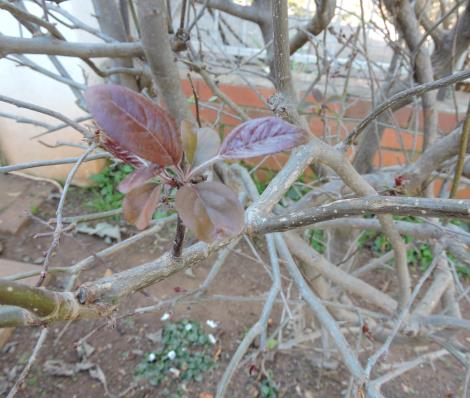
A bud - we have life!
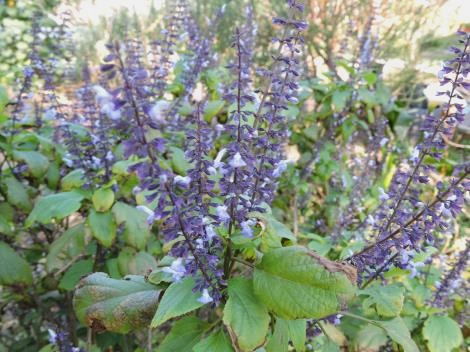
Salvia roscida - a non-stop performer throughout winter
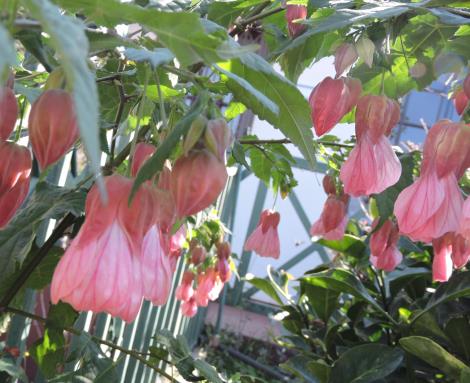
Abutilon lenah
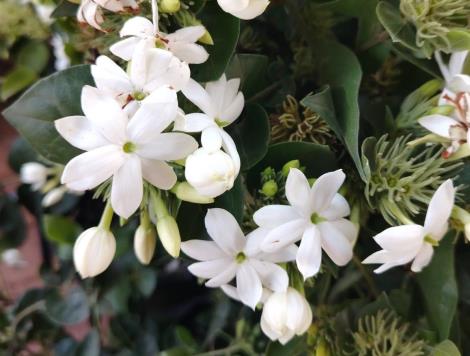
Jasnimum sambac
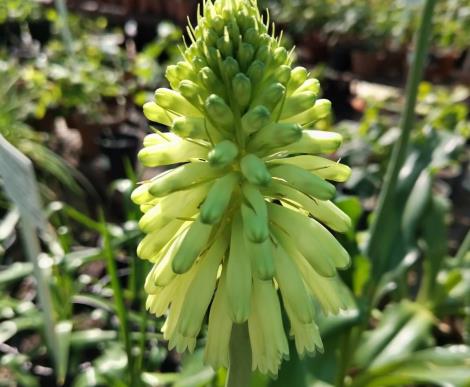
Veltheimia citron
IN THE NURSERY
Click here to view all the plants in this newsletter on one website page.
Indigenous plants
Aristea ecklonii (common name: Blue-eyed grass) is a fast growing evergreen perennial with a basal fan of tufted narrow leaves and spikes of dark blue flowers all season. This hardy plant grows about 50cm high and does equally well in sun or shade.
The dainty upright evergreen shrub Hibiscus pendunculatus has a woody base, rough lobed leaves, and large solitary pink flowers from spring to autumn. It reaches about 1m in height and is happy in sun to semi-shade. We have plants in 5 litre bags.
The Mickey Mouse like fruits of Ochna barbosae make it a children’s favourite, while its yellow flowers attract birds and butterflies in spring. This gorgeous slow growing semi-hardy shrub is evergreen, grows on average 1m high, and likes sun to semi-shade.
Senecio oxyodontus is a very hardy scandent shrub that grows about 1,2m high and has lovely feathery foliage and panicles of yellow flowers from spring to autumn. It is happy in sun or semi-shade, and does very well at the coast as well as inland.
Exotic plants
Our Allium triquetrum plants are starting to come into bloom now. This is a new clump-forming deciduous bulb with triangular stems, straplike leaves, and green-striped white flowers that attract bees. Plant in semi-shade.
Hippeastrum papilio (the butterfly amaryllis) is an evergreen clump-forming bulb that has dark green straplike leaves and extraordinary red and green flowers in spring. It is semi-hardy, grows about 75cm high, and wants a shady position.
The strongly scented white flowers of the lovely Jasminum sambac are a must for the spring garden. This bushy scrambling evergreen climber reaches an average height of 1,8m and is happy in sun or semi-shade. We have huge plants in the nursery.
Weigelia florida variegata is a very hardy deciduous approximately 1,3 high shrub with white-edged green leaves and masses of rose pink tubular flowers on arching stems in summer. In addition to attracting birds, it makes a good cut flower. Plant in sun to semi-shade.
SNIPPETS
Plant and garden-related events have started hotting up.
Flora Africa’s Impala Lily Fest takes place just north of Pretoria from 21 to 29 August, 09h00-13h00 (closed on 24 August).
If you are in the Nelspruit area, pop in at the AfriOrchids International Garden Festival from 29 to 31 August. More info on their website.
Leon Kluge’s gold award winning 2025 RHS Chelsea Flower Show display will be recreated as part of the Stanford Bloom spring festival from 10 to 20 September. If you don’t want to miss the opportunity to see this magnificent display (and accompanying collection of botanical artworks from the Grootbos Florilegium), book now via Webtickets.
FUN FACT
As suggested by its common name – Three-cornered Leek – all parts of Allium triquetrum are edible. As a culinary flavouring, it is similar to chives or garlic.
Happy gardening!
Leoné
082 482 0257