
Back in May 2023, we celebrated Andy de Wet and Quinton Bean winning Plant of the Year at the Chelsea Flower Show for their Agapanthus Blackjack. (If you missed that newsletter, you can catch up here.) Never people to rest on their laurels, it comes as no surprise that these passionate breeders have once again come up with something extraordinary.
As experts in their field, Andy and Quinton knew that Agapanthus contain anthocyanin, the pigment that is often responsible for pink or red flowers. This could only feel like an irresistible challenge, and in 2005 they embarked on the journey of breeding a pink Agapanthus. A long and arduous journey it was too, with an estimated 40,000 hand-pollinated seeds grown to maturity at enormous expense over the next 20 years. After countless hours of careful selection, the verdict was in and Agapanthus Blush Pink was born.
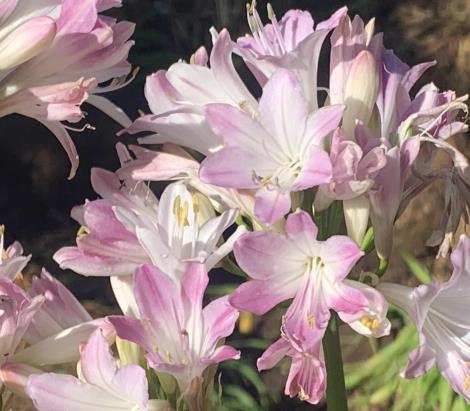
Agapanthus Blush Pink
The vast number of plants that get rejected along to the way to a final ‘yes’ is testament to the restraint, discipline, perfectionism, dedication (and perhaps emotional resilience!) that place Andy and Quinton among the world’s foremost plant breeders.
Agapanthus Blush Pink will be released at the Aloe Farm and CND Nursery on 1 March.
IN THE GARDEN
We have been on a veritable roller coaster ride of extremely high temperatures and then long periods of almost constant rain and cooler temperatures. No matter how resilient I believe plants to be, there has to be some damage that comes from this.
The moonflowers were laden with blooms last January; this year, the flowering was sparse. Examining one of the culprits revealed that its roots had rotted away! It looks like we will have to replace most of the moonflowers in the garden. We had a similar situation with the abutilons which seemed to survive the December heatwave, but most have since succumbed to die-back. And then this morning, Sandra showed me that our Cistus shrubs (a Mediterranean type plant) also seem to be losing their will to live.
Wherever we are located, we as gardeners find ourselves having to learn how to deal with the peculiar elements and insect infestations brought on by Mother Earth’s strange new weather patterns.
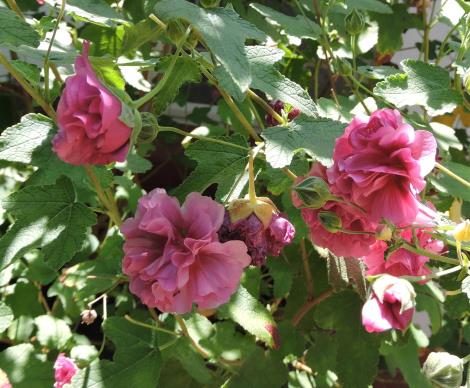
Anisodontae Double Pink
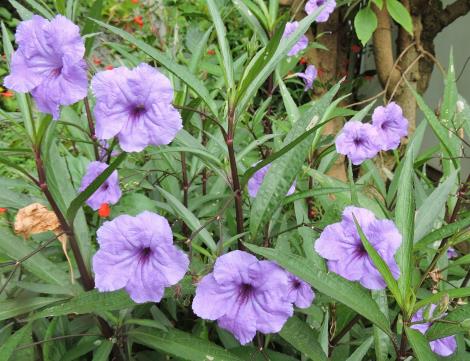
Ruellia brittoniana
.jpg)
Rudbeckia bee sanctuary
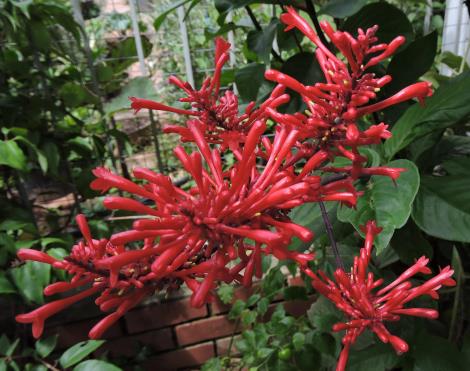
Odontonema strictum
IN THE NURSERY
Click here to view all the plants in this newsletter on one website page.
Indigenous plants
Indigenous to the Western Cape, Amaryllis belladonna is a summer deciduous bulb that has scented pink flowers in autumn and pushes out strap-like leaves after flowering. Plant in full sun.
Mondia whitei is a threatened climber with veined leaves and clusters of unusual purply-red and white flowers in summer. This evergreen semi-hardy plant grows in forests and riverine woodland so it likes shade to semi-shade, and moist conditions. It reaches an average height of 5m.
Mundulea sericea is a gorgeous slow growing single-stemmed deciduous shrub with silky light green leaves and clusters of lilac flowers from spring to summer which attract birds, bees and butterflies. The common name of cork bush comes from its furrowed bark. Plant in full sun and dry, sandy soil.
Thunbergia - Colorado glow is one of the most striking black-eyes Susans. The black-centred dark orange-red flowers of this hybrid approximately 2.5m high climber attract birds, butterflies and bees to the garden from spring to autumn. Evergreen and hardy, it is happy in sun or semi-shade.
Exotic plants
Fuchsia alpestris is a hardy evergreen lax climber with long narrow dark green leaves and pendant red and purple flowers from summer to autumn. It grows about 2m high and likes semi-shade. The best of the climbing fuchsias in my opinion.
Hydrangea quercifolia is the proverbial plant that keeps on giving. Conical flower heads of creamy white flowers appear in spring and last well into autumn, with the sterile flowers becoming pink to bronze with age. The deeply lobed leaves also turn a rich bronze-red to purple in autumn. This very hardy deciduous shrub reaches an average height of 1.5m and prefers semi-shade. We have plants in 10 litre bags.
With the lovely common name of angel wing jasmine, Jasminum nitidum brings intensely fragrant star-shaped flowers to the summer garden. This is a fast growing climber with slender stems and glossy leaves that is happy in sun or semi-shade. It grows on average 3m high.
Phlogocanthus turgidus (lavender bells) is a slow growing upright evergreen shrub with deep green glossy leaves and lavender-pink bell-shaped flowers from winter to spring. It can take sun to semi-shade but wants dry, sandy soil. Its rather unattractive Latin name belies how gorgeous this plant is!
SNIPPETS
As mentioned, we are desperate to replenish our abutilon stock. Is there anyone who can help with cuttings? We are more than happy to collect or arrange for a courier pick-up.
FUN FACT
The name Agapanthus comes from the Greek words agape (love) and anthos (flower).
Happy gardening!
Leoné
082 482 0257