
That Petal Faire’s mail order service just goes from strength to strength never ceases to amaze me. Considering what the plants are subjected to in order to reach sometimes very far-flung clients, I can only ascribe the success of this side of the business to the care and efficiency with which my staff prepare the packages so that plants don’t arrive dead or dying on the other side.
I recently received an order for two jade vines from just such a far-flung client. I must emphasise here that after more than 20 failed attempts, I eventually gave up on stocking this gorgeous but notoriously difficult plant. Whenever I encounter one on my plant purchasing rounds, I have to sternly remind myself that it is sure to expire shortly after entering our yard!
At great expense, I managed to source two plants and we sent them off with the necessary disclaimer, and our hearts in our mouths. Lo and behold, he reports that the plants not only arrived in good shape but are thriving! Kudos to Sandra and Lebo.
Please note this was an opportune find and we were able to help a client. We don’t stock jade vines and never will. If you are desperate for one, there are nurseries in KwaZulu-Natal which may be able to help.
IN THE GARDEN
Our prayers for rain during one of the longest heat waves I can remember were followed by (slightly less fervent) prayers for the rain to let up.
The garden is totally overgrown, caterpillars and beetles are having a field day, and every vulnerable plant seems to have been attacked by the dreaded mould. But as we see the heat and moisture stressed plants start to revive and those in their flowering season burst into bloom, all is forgotten and we appreciate anew nature’s wonderful way of recovering from adversity.
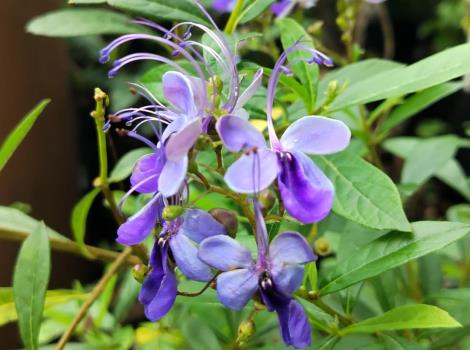
Rotheca ugandense
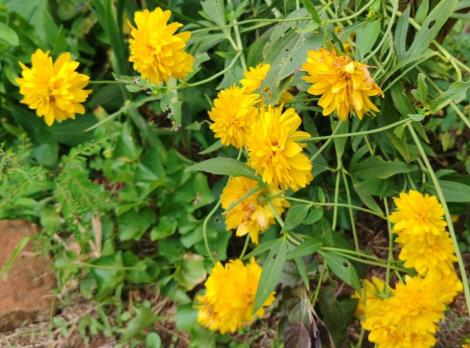
Rudbeckia goldquelle
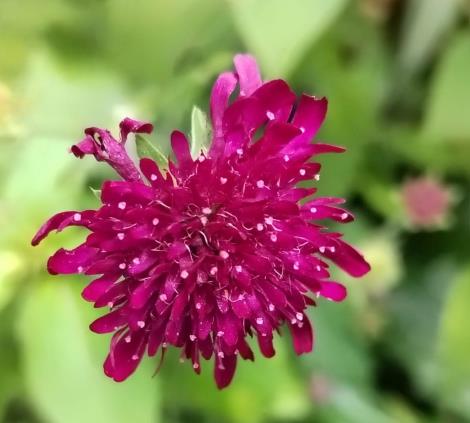
Knautia macedonica
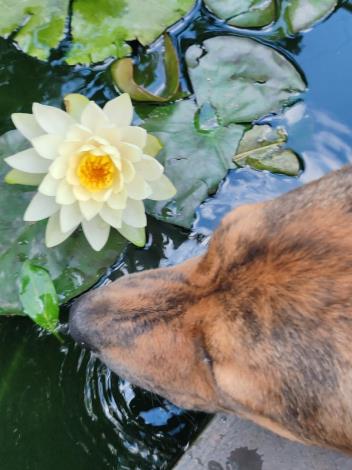
Pond water always tastes the best
IN THE NURSERY
Click here to view all the plants in this newsletter on one website page.
Indigenous plants
The evergreen Bowkeria citrina is a rare very hardy multi-stemmed shrub with narrow lemon-scented leaves and bright yellow scuttle-shaped flowers from summer to autumn. Indigenous to northern KwaZulu-Natal and southern Mpumalanga, it wants moist conditions and sun to semi-shade. It reaches an average height of 2m.
Bulbine abyssinica is a good option for the waterwise gardener. This clump-forming evergreen perennial with linear grass-like foliage produces spikes of yellow star-shaped flowers from spring to summer which are much loved by bees. It is hardy, grows about 50cm high, and wants full sun.
The very hardy clump-forming bulb Cyrtanthus – Venus has spectacular red trumpet-like flowers in summer. This deciduous plant reaches an average height of 40cm, and is happy in sun to semi-shade.
Sclerochiton harveyanus is an upright semi-hardy evergreen shrub with small, heart-shaped two-tone glossy leaves and scented dark blue flowers from summer to autumn. It grows about 2m high and wants shade to semi-shade. Insects love it.
Exotic plants
The Brazilian Echinodorus palaefolius is an approximately 90cm high deciduous bog plant with large bright green pointed oval leaves which produces three-petalled white flowers on floral stems in spring. It wants full sun and – like most aquatics – needs up to 25cm of water above the crown.
Hedychium coccineum – Tara is an upright perennial with sturdy stems and blue-green lance-shaped leaves. The dense racemes of orange flowers attract birds to the garden from summer to autumn. This clump-forming deciduous plant grows on average 1.8m high and likes semi-shade.
Salvia – Apple Blossom is a fast growing evergreen perennial with lovely long-tubed pale coral flowers all season. It can take sun to semi-shade, and reaches an average height of 80cm. Can one ever have too many salvias in the garden…?
Solanum wendlandii (or Paradise flower) is a deciduous woody climber with thorny lime green leaves and clusters of large pale blue flowers from summer to autumn. It is semi-hardy, grows on average 400cm high, and does best in full sun.
SNIPPETS
In our November newsletter, I mentioned that Chocolate bells had been spotted at Rietvlei Nature Reserve. We hotfooted it over there and were not disappointed. I wouldn’t be exaggerating if I said the excitement was on par with a cheetah sighting in Kruger!
Those who have a particular fondness for hostas may want to check out our new website page dedicated to these lovely plants.
FUN FACT
Hostas are actually edible and are in fact eaten in many parts of Asia, usually fried. They are however toxic to cats and dogs. (Source: siennahosta.co.uk)
Happy gardening!
Leoné
082 482 0257