
Finding out about the benefits of a plant beyond its attractiveness is always an added bonus. We are fairly used to hearing about the medicinal uses of plants or how effective they are for deterring pests in the garden and home, for example. And then along comes a story about a plant that is cultivated large scale for consumption turning out to have properties that make it uniquely suited to something entirely different. Those of you who also spotted the (not very prominent) article about Leafline in Daily Maverick a month or so ago will already know what I am talking about!
Pineapple fibre has long been used in textile production, but it took Candy Androliakos (a beautician and volunteer at a retirement village) to contemplate the potential of its unique absorbency.
The impact of disposable incontinence and feminine hygiene products on the environment is well known by now. They are also expensive which puts them out of the reach of many elderly people as well as young girls who often miss days of schoolwork during their periods for fear of being embarrassed.
The result of Candy’s light bulb moment and courageous decision to take action has been a multi award winning Eastern Cape company employing ladies from a special needs school to make a, attractively packaged range of nappies, chair and bed protectors, and feminine hygiene products that are washable and reusable – in other words, earth-friendly and affordable.
Click here for the whole truly feel-good story!
IN THE GARDEN
Well, this is just the favourite time of the year for gardeners, is it not. I sometimes wonder if the sense of anticipation as flower and leaf buds start joyfully popping out everywhere is even better than the splendour of the garden when everything is in full bloom!
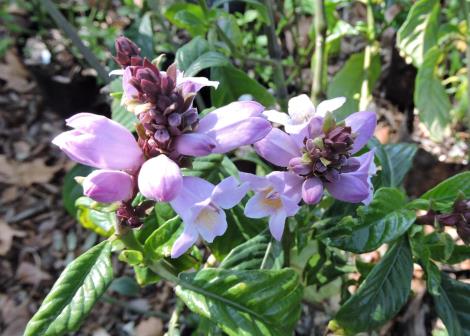
Phlogacanthus turgidus

Iberis sempervirens
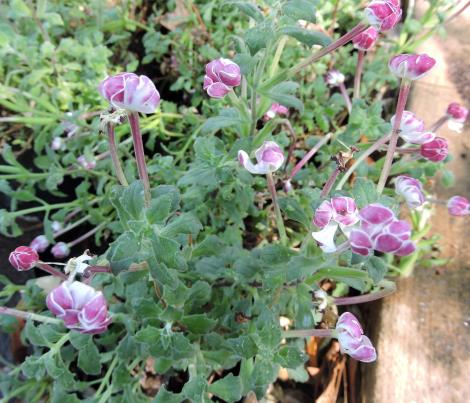
Zaluskianski buds
It was a late start to the season and we have only just finished pruning shrubs and perennials, but the plants don’t seem to mind. Sandra and the team have also been very busy planting vegetables. We are hoping that the birds and other hungry critters don’t get to them before we do. For now, it is all looking very promising.
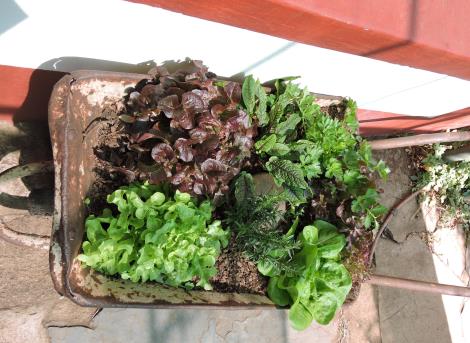
Signs of a good vegetable harvest!
August being my birthday month, I was thrilled when my Dendrobium speciosum presented with seven flower sprays. What a picture! Baie dankie, Pieter en Adriaan.
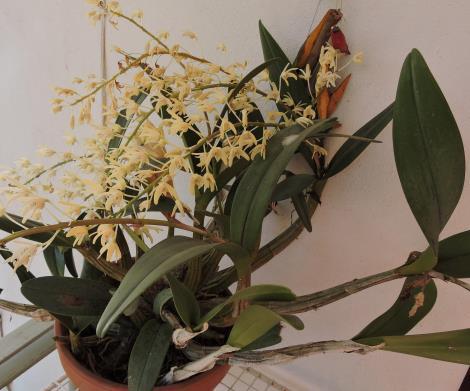
My gorgeous Dendrobium speciosum
IN THE NURSERY
Click here to view all the plants in this newsletter on one website page.
Indigenous plants
The Cancer bush, Lessertia frutescens, is considered to be a miracle medicinal plant. This waterwise self-seeding shrub with pinnate silvery leaves has bright orange flowers from spring to summer followed by bladder-like seedpods. Evergreen and very hardy, it grows on average 1m high and wants full sun and dry sandy soil.
Although a woodland shrub/tree, Ochna barbosae likes dry sandy soil. Reaching a height of about 3m, it has scented yellow flowers in spring followed by pinkish fruits. Deciduous and hardy, it is more robust than Ochna serrulata.
The evergreen hardy Schotia brachypetala (the Huilboerboon) is a lovely approximately 10m high tree with a large densely branched canopy. In addition to being a host plant for four indigenous butterfly species, its clusters of gorgeous red flowers attract birds and bees to the garden from spring to summer. It wants full sun.
Zaluzianskya katharinae (or Turkey drumsticks, if you will) is a dainty perennial indigenous to Gauteng, Mpumalanga and Limpopo. Growing about 50cm high, it has sticky stems, greyish leaves, and pinkish pops that open into scented white flowers at night for pollination by moths. Deciduous and hardy, it is happy in sun to semi-shade.
Exotic plants
Beaumontia grandiflora, is a robust woody evergreen climber which grows on average 4m high and has gorgeous large fragrant white flowers all season – in fact, all year round in our garden. Plant in full sun.
Caltha palustris is a very hardy evergreen marginal bog plant with rhizomes that produce kidney shaped toothed leaves. The vibrant waxy yellow flowers from spring to summer are a must around a pond! Be sure to have at least 10cm of water above the crown of the plant.
The fast-growing shrub Clerodendrum quadriloculare (also aptly known as the Starburst bush) has purple-backed grey-green leaves and huge clusters of white flowers which attract butterflies in spring. Evergreen and hardy, it grows about 3m high and likes sun to semi-shade.
Lychnis flos cuculi is a lovely addition to a woodland garden as it is happiest in moist conditions and sun to semi-shade. This is a mat-forming perennial with rosette-forming lanceolate leaves and narrow, almost raggedy petaled pink flowers from spring into summer. About 60cm high, it is evergreen and very hardy.
SNIPPETS
An eagerly anticipated new book on South African indigenous plants by three highly acclaimed indigenous plant experts – Elsa Pooley, Geoff Nichols and Andrew Hankey – will be coming out in March 2025!
Joint publishers Struik Nature and the Flora & Fauna Publications Trust are looking for sponsors to make the book affordable for the average gardener. Click here if you would like to contribute. Don’t be deterred by references to a 31 August 2024 deadline. I have it from the horse’s mouth that no contribution will be turned away.
FUN FACT
Did you know? The Afrikaans name for Schotia brachypetala – Huilboerboon (Weeping boer bean) comes from the copious amounts of nectar that spill from the flowers. The tree’s Latin name honours Richard van der Schot, the Head Gardener at Schönbrunn Palace in Vienna.
Leoné
082 482 0257