
The botanical naming system offers scientists and botanists worldwide an important universal language, but many new and even not so new gardeners can find it intimidating and will skim past a plant’s scientific name to find its more familiar common one. However – without needing to sign up for a degree in Botany (or Latin) – some of the terms in this scientific name can provide you with useful information when designing a garden, or simply tell you something interesting about a plant’s origins and preferred conditions.
For instance, the species name ‘annuus’ indicates that the plant is an annual (Helianthus annuus is the humble sunflower’s loftier name – see what you could have missed). If you are planning a white garden so that you can enjoy the glow of flowers in the moonlight, look for plants with ‘alba’ in the name. Unsurprisingly, the term ‘natalensis’ will tell you that a plant hails from KwaZulu-Natal and might not thrive in the not so tropical climes of Gauteng. Less obviously, ‘elata’ means tall, giving you an idea of what you can expect of the young specimen you are eyeing in a nursery, while ‘filifolia’ tells you that fine foliage is a distinguishing feature.
Needless to say, these examples are just the tip of the iceberg, but perhaps your interest will be piqued enough that you decide to indulge in some self-study that opens up a whole new world! I have included some further explanations/translations in the descriptions of what is in the nursery at the moment.
Jason Sampson, curator of Pretoria University’s Manie van der Schyff Botanical Garden, passed on an interesting snippet in this regard. A species name that is clearly a human one with the suffix ‘-ae’ (e.g., Clerodendrum thomsoniae) indicates that the plant was named after a woman, while ‘-ii’ (e.g., Albuca nelsonii) tells you a man received the honour.
IN THE GARDEN
This month has been a roller coaster between heat waves and cold snaps. Maybe we need to practice emulating some of the resilience of our garden plants – once they are on a roll, they do not step back for anything or anyone. Cold snaps or heatwaves are taken in their stride.
I have been wandering through the garden trying to decide what highlights to chat about. So many lovely Chinese lanterns, salvias and other perennials. Walking down to check on the Tabebuia rosea which is now coming to the end of its flowering, I noticed that the Schotia brachypetala (huilboerboon) is full of buds – about four years after planting. How wonderful! I cannot wait for the influx of birds when it is in full bloom.
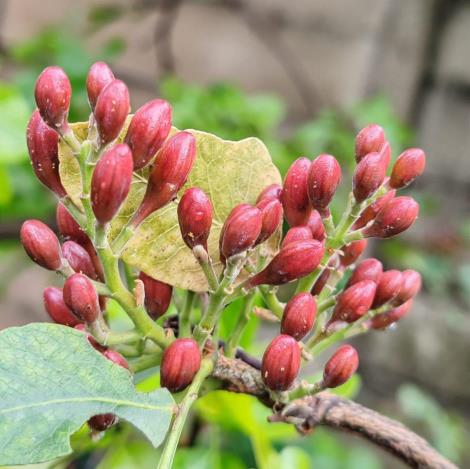
Schotia brachypetala - sign of things to come
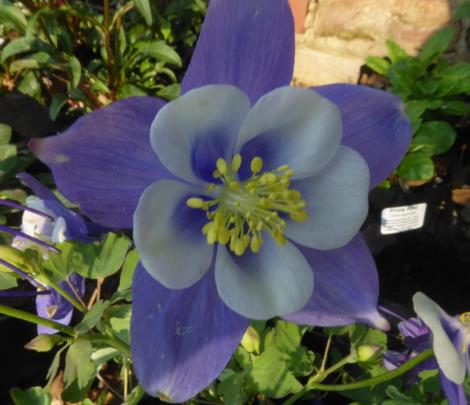
Aquilegia
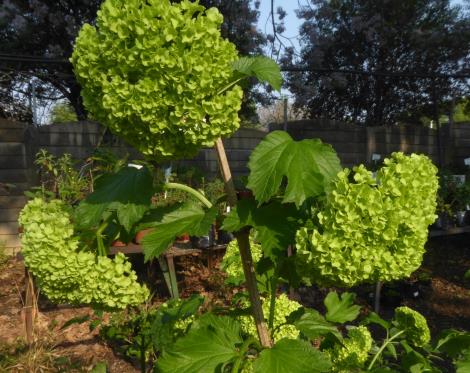
Viburnum opulus
.jpg)
Syringa vulgaris
IN THE NURSERY
The nursery is overflowing with new stock so this newsletter is fuller than usual. Click here to view all the plants in this newsletter on one website page.
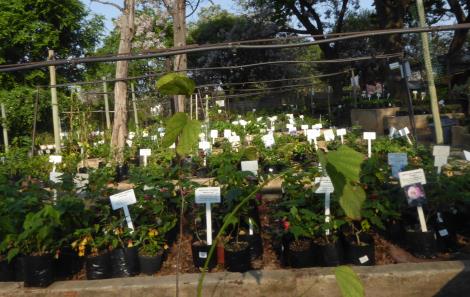
Indigenous plants
A dainty rounded summer-blooming shrub with two-lobed roundish green leaves, Bauhinia natalensis has delicate scented crinkly white flowers with a deep red stripe on one of the petals. Evergreen and hardy, it reaches an average height of 2 m, and likes sun to semi-shade. We have plants in 10 litre bags. (natalensis = from Natal.)
The African morning glory, Falkia repens, is a tough groundcover which makes a wonderful indigenous daisy lawn in either sun or shade. Evergreen and very hardy, its cup-shaped pale pink or white flowers in spring are pollinated by moths and bees. (repens = creeping, prostrate, rooting.)
The 40 cm high Kniphofia pauciflora has greyish green strap-like leaves and spikes of tubular yellow flowers from spring to autumn. Extinct in the wild, this dainty evergreen perennial likes sun but moist soil. The plants are in full bloom now. (pauciflora = few flowers, although I think the scientist missed our local kniphofia here – it has plenty!)
Polygala virgata alba is a self-seeding evergreen shrub that grows about 2 m high and has spikes of white flowers all season. Happy in sun or shade, it wants pruning back for shape and is seen to best effect when planted in groups. It makes a good cut flower. (alba = white, virgata = twiggy, long and slender.)
The evergreen semi-hardy Rothmania globosa is an upright shrub with glossy foliage and fragrant cream bell-shaped flowers in spring, followed by round fruits. Loved by butterflies and bees, it reaches an average height of 3 m and wants semi-shade. (globosa = roundish, referring to the fruits.)
Exotic plants
Allium triquetrum is a new clump-forming edible bulb with triangular stems, strap-like leaves and white flowers with a green stripe. This hardy deciduous plant grows on average 40 cm high, and likes semi-shade. The plants are coming into bloom now. (triquetrum = three-cornered stems.)
Our Clematis montana plants (in 10 litre bags) are also in bud. A vigorous, very hardy deciduous climber with a froth of four-petalled white flowers in spring, it likes semi-shade and can grow up to 6 m high. As a group 1 clematis, it needs no pruning. (montana = mountain grower.)
The 2.5 m high evergreen twining vine Mansoa alliacea owes its common name of garlic vine to the scent of its bright green leaves. Semi-hardy and happy in sun to semi-shade, it gives you sprays of tri-coloured lavender flowers in spring and autumn. Prune hard after flowering. (allicea = smell or taste of garlic.)
The large clusters of white flowers of the deciduous snowball bush, Viburnum opulus Sterile, are one of the joys of the spring garden. This strong rounded bush reaches an average height of 3 m, and likes sun to semi-shade and moist soil. We have plants in 10 litre bags. (opulus = wealthy or abundant.)
Weigelia florida variegate is a 1.5 m high summer-flowering deciduous shrub with white-edged green leaves and arching stems with masses of rose pink tubular flowers that attract birds and do well in the vase. It is very hardy, grows about 1.3 m high, and is happy in sun to semi-shade. (florida = floriferous, with lots of flowers.)
SNIPPETS
At this time of the year, we are spoiled for choice when it comes to open gardens. to haveopen gardens to pick and choose. Social media is probably the best way to keep up to date. This year, there will also be the Open Gardens of Prince Albert. What a joy!
As we luxuriate in our spring gardens, we have been reminded of the less benign face of nature in the past few weeks. Our thoughts and prayers go to all those who have been affected by the devastating storms, floods and fires in various parts of the country.
Happy gardening!
Leoné
082 482 0257