
Among the many gardening books on my bookshelves, there is one by Roger Turner called ‘Design in the Plant Collector’s Garden’. Browsing through it again the other day, I decided I couldn’t resist sharing Roger’s whimsical analogy between a plant collector and a patient suffering from a disease, as I am sure many readers will relate.
The first similarities between falling prey to plant collecting and succumbing to another kind of bug are that people don’t plan to do either, and that both afflictions develop gradually and insidiously. Friends and relations who are keen gardeners are often where you catch this highly contagious ailment, and before long you are exhibiting a well-known symptom; involuntary mutterings of “I must have [fill in the blank]” and “Just ONE more [fill in the blank]”. The next evidence of decline is when the collector frantically tries to restore the garden (and him- or herself) to health by moving those “must have’s” back and forth in search of the perfect spot for everyone.
This is quickly followed by a burgeoning parallel indoor collection - of books covering everything from practical how-to manuals to sumptuous coffee table books. The purchase of the first hefty plant encyclopaedia is a sign that things have reached crisis point.
Roger describes the beginning of the end as follows: “When the patient actually prefers to sit up in bed reading these books to lying down beside his or her partner, it’s clear that the full-blown disease has taken hold. The final stages of the malady evidence themselves in a row of expensive monographs on genera of particular interest to the patient.”
Reading this again the other day gave me the best kind of chuckle; the one that comes from recognising a perfect description of your personal foibles. I hope it brings you one as well!
IN THE GARDEN
We have had the first of our season’s rains – what a blessing, especially after the heat wave of a few weeks ago. You can almost hear the garden breathe a sigh of relief!
There is always some bad with the good. In our case, this wonderful time of year has been accompanied by an infestation of lily borer attacking everything with a bulb. Possibly because we did not monitor it from the start of the season while dealing with all the weeds? The weeding team is hard at it now, at least. Five 80 litre buckets of undesirables went out with the rubble removal this morning.
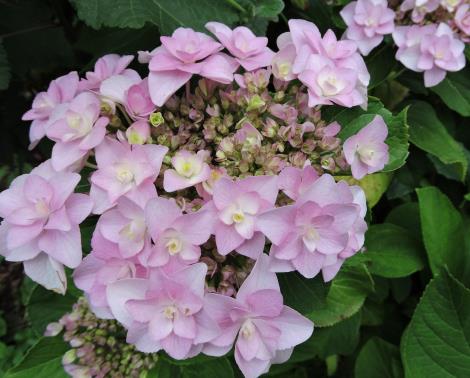
Hydrangea Winning ways
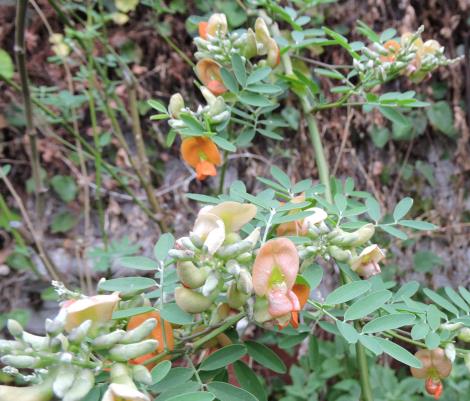
Tephrosia pondoensis
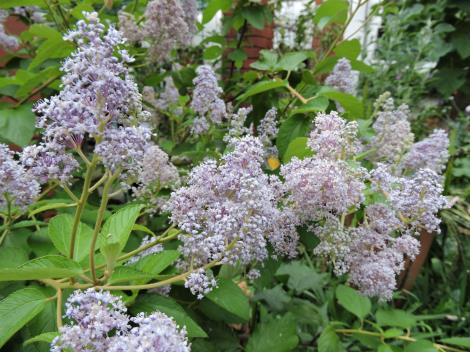
Ceanothus Gloire de Versailles
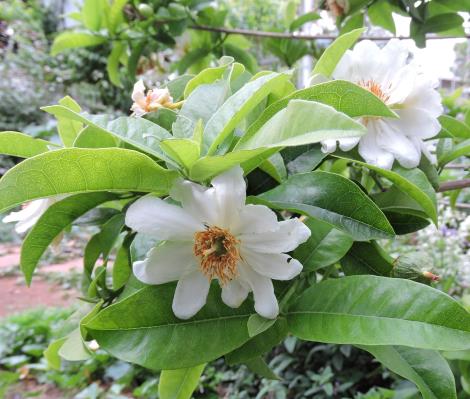
Xylotheca
.jpg)
Dianthus white
IN THE NURSERY
Click here to view all the plants in this newsletter on the website.
Indigenous plants
The gorgeous pink flower clusters of the Marsh lily, Crinum campanulatum, are one of the real highlights of the spring to early summer season. A clump-forming bulb with narrow straplike leaves, this evergreen very hardy bog plant wants full sun and moist soil. We have plants in 5 litre bags.
Galtonia candicans is another lovely indigenous bulb. A summer bloomer, its spikes of white bell flowers do well in the vase. This very hardy deciduous plant hails from the Drakensberg and grows about 120cm high. Plant in full sun with the top of the bulb just under the surface of the soil.
Karomia speciosa is a sun-loving multi-branched shrub with small triangular leaves and delicate pinky-mauve flowers with a purple inset in summer. Evergreen and very hardy, it reaches a height of about 2m, but be warned – it is VERY slow growing!
Pentas lanceolata - pink is a multi-stemmed hardy evergreen shrub with dark green furry lance-shaped leaves and clusters of pink starlike flowers which attract butterflies to the garden all season. It grows about 1.2m high and can take sun to semi-shade.
Exotic plants
Aster ericoides is a compact bushy evergreen perennial with sprays of white daisy flowers in summer which attract butterflies. It is very hardy, likes full sun and grows on average 30cm high.
The cup-shaped flowers of Cistus Pink pearl are a lovely pale pink. A compact mound-forming shrub with grey-green wavy-edged leaves, it grows about 75cm high, is evergreen and hardy, and likes sun and dry sandy soil. The flowers from spring to summer are loved by bees, butterflies and birds.
Filipendula vulgaris sports sprays of little white flowers in summer. This is a 70cm high rosette-forming perennial with finely divided fernlike leaves. Evergreen and very hardy, it is happy in sun to semi-shade.
The maroon-centred lilac flowers of the Rose of Sharon (Hibiscus syriacus) are reminiscent of the old-fashioned hollyhock which one only seems to see growing wild on abandoned lots these days. A very hardy deciduous upright shrub, it has palmate leathery textured leaves, it grows about 2m high and flowers from summer to autumn. Plant in sun or semi-shade.
SNIPPETS
Please don’t forget the open gardens all over the country. I was privileged to visit one in Hyde Park last Sunday. – what a joy and so many good ideas to be gleaned.
Happy gardening!
Leoné
082 482 0257