
Every day feels like garden day at this time of year, doesn’t it, but on Sunday 9 October we officially celebrate national Garden Day!
Garden Day was launched seven years ago by a group of enthusiastic gardeners wanting to encourage people to celebrate their green spaces - big or small - together with neighbours, family and friends. Gundula Deutschländer of Babylonstoren, one of the movement’s founding gardeners, says, “For me it’s a day to ignore my tools and look beyond the weeds, and simply be in the moment and take pleasure in the beauty of my garden. I love the idea of sharing my green space with others, and I’m always excited to see how creative everyone is on Garden Day.”
This annual event (back after the lockdown hiatus) is about sharing and paying tribute to our gardens by hosting a tea party, braai, picnic or any other form of outdoor get-together. If you are fortunate enough to be close to or, even better, involved in a community garden, what better place to connect with green-fingered friends! There is a handy toolkit on www.gardenday.co.za to help you plan your celebration, including recipe ideas, downloadable invitations, things to do with children in the garden, and details about community garden collaborations. You can also join the newly founded Garden Day Society to spread the word and plant more seeds in your community.
For more, Whatsapp the Garden Day team on 066 389 5182, or catch news, updates and inspiration at @GardenDaySA on all social media platforms, where you can also share photographs of your nature-filled celebrations.
IN THE GARDEN
As the temperatures rise and we wait with bated breath for the first summer rains up here in Gauteng, pictures of the garden say more than a thousand words could. An absolute riot of colour!
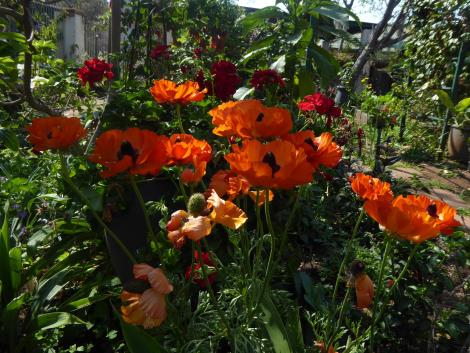
Nothing says spring like Ranunculus!
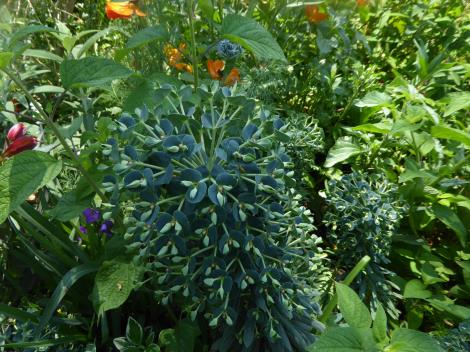
Euphorbia wulfenii
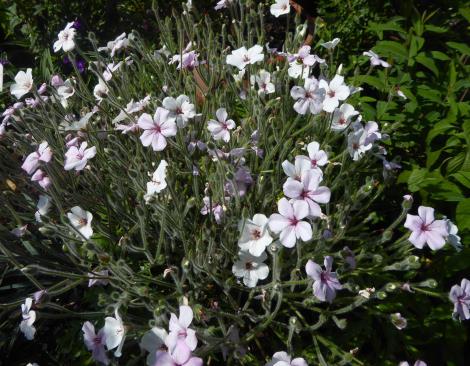
Geranium madarense alba
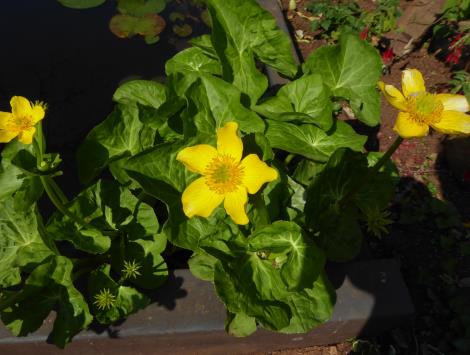
The radiant yellow of Caltha palustris

Dimorphotheca jucunda

The gorgeous Amsonia tabernaemontana
IN THE NURSERY
Click here to view all the plants in this newsletter on the website.
Indigenous plants
As its common name implies, the evergreen, very hardy Karoo sage (Buddleja glomerata) likes full sun and dry, sandy soil. This is a neat upright shrub with attractive tough scalloped grey-blue leaves and pyramids of yellow flowers in summer. It grows up to 2m high.
The dainty rounded Pelargonium tongaense pink is one of the few shade-loving pelargoniums. A creeping perennial with bright green leaves, it has masses of bright, dark pink flowers that illuminate even deeply shaded areas of the garden from spring to summer. It is evergreen and hardy, and reaches an average height of 25cm. Indigenous to KwaZulu-Natal.
The clump-forming perennial Scabiosa africana pink is indigenous to the Western Cape. It has rosettes of deeply lobed leaves and large pompom flowers from spring to autumn. About 75cm high, it is evergreen and very hardy, and is happy in sun or semi-shade.
Senecio tamoides variegata is a fast-growing succulent climber with frilly creamy variegated leaves and large clusters of small scented yellow flowers in autumn that attract butterflies. Evergreen and semi-hardy, it grows about 3m high and likes semi-shade.
Exotic plants
Ajania pacifica is a tough mound-forming perennial which likes full sun and dry, sandy soil. Evergreen and very hardy, it has silky silver-edged leaves and yellow flowerheads in autumn. It has a creeping habit and grows about 30cm high.
The waterwise Cistus x pulverulentus also thrives in sunny, sandy conditions. This bushy compact evergreen shrub has dark green oval crinkly-edged leaves and rosy pink saucer-shaped flowers in summer. It reaches an average height of 80cm.
Similarly waterwise, the Tatarian honeysuckle (Lonicera tatarica) is a fast-growing bushy shrub with lance-shaped blue-green leaves and two-lipped pink and cream flowers in summer. It is said to reach a height of about 2m, although mine is 1m high. Plant in sun or semi-shade
Hailing from Brazil, Fuchsia alpestris is a hardy evergreen lax climber with long narrow dark green leaves and pendant red and purple flowers from summer to autumn. It grows up to 2m high and wants semi-shade. To my mind, the best climbing fuchsia!
SNIPPETS
As though there isn’t enough to keep us busy outside, I now also have the (un)enviable task of raising 16 chicks – the offspring of our little Seabright bantams. With any luck, I will succeed in bringing them all to maturity and being able to offer them for sale in a few months. Perhaps you were inspired by the "chicken story" in our previous newsletter!
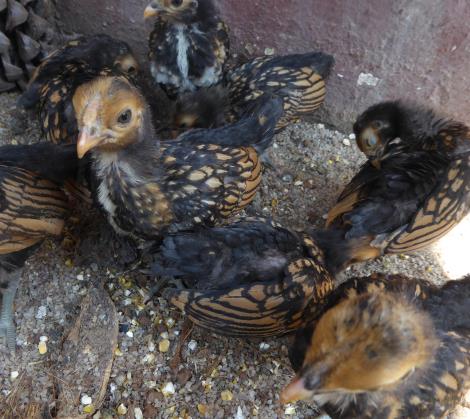
Our baby bantams
Happy gardening!
Leoné
082 482 0257