
Always a keen gardener, my friend Jennifer is one of the many people who got bitten by the homesteading bug in 2020. As her interests turned to growing vegetables, the ornamental garden – fortunately well established by then –slowly fell victim to some benign neglect, and little by little lawn has been sacrificed to make way for bigger veggie beds.
A few unfortunate planting decisions, and realising how much careful seasonal planning is needed if one really wants food from the garden all year round, have been the cause of some distress but she soldiered on.
Chickens seemed like the natural next step and the learning curve was steep. It turned out that there is more to keeping chickens than meets the eye, no matter how small your flock (four in this case). They can be prone to ailments you’ve never heard of and that your suburban vet knows nothing about. And they need more in the way of nutrition than the bag of chick-chick you can pick up in the pet section of the supermarket. But poo-laced coop bedding is a welcome addition to the compost heap, and the delight of having fresh eggs virtually every day from your own happy chickens more than makes up for all that.
Happy chickens means free range of course; which is where the garden re-enters the story. The generosity with which the girls apply manure as they go, and the noticeable absence of slugs, snails, and some weeds are definite benefits. The ‘skropping’ in the flower beds not so much. Hardly a crocosmia flower was seen this year as those little shallow bulbs were tossed around in the hunt for garden delicacies.
Dealing with a chicken’s insatiable appetite for winter greens and brassicas is a story for another day, Jennifer tells me!
IN THE GARDEN
There really are no words for this time of year, are there! Now that the requisite last cold snap is behind us, it’s perfect gardening weather - and just as well. because there is no end to what needs doing.
In between the sowing, planting, pruning, weeding and feeding, remember to take the time to soak in and enjoy all the burgeoning new life.
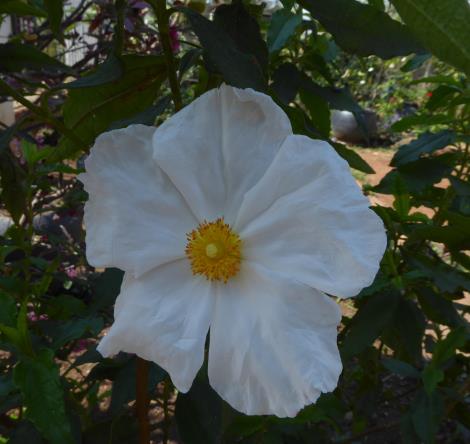
White Cistus
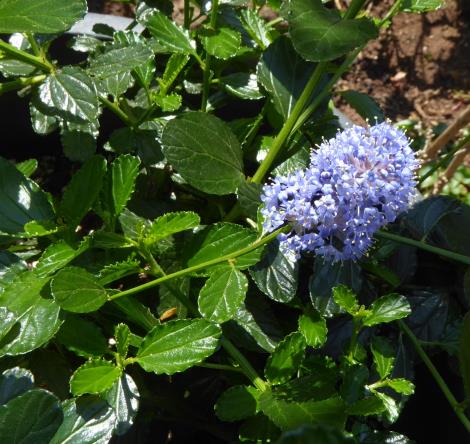
Ceanothus repens
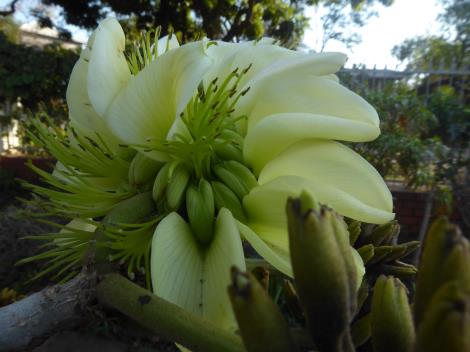
The gorgeous yellow Erythrina caffra

Blue Felicia
IN THE NURSERY
Click here to view all the plants in this newsletter on the website.
Indigenous plants
With its terminal clusters of yellow flowers all year round, Gnidia triplinervis is one of those star performers in the garden. A multi-branched perennial shrublet indigenous to KZN, it is evergreen and hardy, grows about 60cm high, and likes full sun.
Another year-round bloomer who wants full sun, Hypoxis angustifolia is a tough clump-forming perennial with bright yellow star-like flowers and attractive leaves keeled with prominent ribs. It is evergreen and very hardy, and reaches a height of about 15cm.
Staying with the yellow theme, Nymphoides thunbergiana is a rare fast-growing deciduous aquatic perennial with the characteristic flat rounded floating leaves of water lilies and dainty star-shaped yellow flowers with feathery edges from summer to autumn. Although its feet must be moist, it likes full sun.
Ornithogalum juncifolia (Star of Bethlehem) is such an underrated plant! An evergreen hardy bulb that multiplies well, it has spikey grass-like foliage and white star-like flowers all summer. Essentially a bog plant indigenous to the Western Cape, it wants moist soil and sun to semi-shade.
Exotic plants
A gorgeous perennial with lobed dark green leaves splashed with white, Acanthus mollis – Whitewater has pink and white funnel-shaped flowers in spring that attract butterflies to the garden. Evergreen and very hardy, it grows about 90cm high and likes sun to semi-shade. A good cut flower.
Bletilla striata is a lovely little clump-forming terrestrial orchid with strap-like leaves and sprays of pink/lilac flowers in spring. Ours are just starting to push out their first buds. This is a deciduous bulb that should be kept dry in winter and divided in early spring. Plant in semi-shade.
To me, the deutzias are one of the highlights of the spring garden. Deutzia gracilis - Nikko is a compact approximately 60cm high deciduous shrub with arching stems and racemes of small white flowers from spring to summer. It prefers semi-shade, and should be pruned back immediately after flowering (see our previous newsletter about pruning).
The spider lily, Hymenocallis littoralis, is a clump-forming bulb from central America. Evergreen and hardy, it has a basal rosette of dark green strap-like leaves and extraordinary frilly edged white flowers from summer to autumn. With flowers, it measures about 75cm in height, and can take sun to semi-shade.
Happy gardening!
Leoné
082 482 0257