
Living Seeds is well-known among vegetable gardeners, but in a recent newsletter they focused on something that has value for any type of gardening.
At Petal Faire, we prune, dig up and transplant at the end of summer, with our eye on the next season. The result is an unattractive winter garden dotted with bare patches. The Living Seeds newsletter was a reminder that plants not only serve as a mulch that protects the soil from sun, wind or heavy rain – their living roots also loosen compacted soil, feed beneficial microbes, and draw up valuable nutrients for the next planting. Nature has her ways, of course, and weeds are always happy to do the job if the resident gardener doesn’t!
I have been persuaded to try out the Living Seeds multi-species winter cover crop this year. In addition to the soil benefits of the 11 species it contains – from vetch, Japanese radish and alfalfa to black oats, peas and brassica mustard – I suspect that we might just have our most interesting winter garden ever.
IN THE GARDEN
In the annals of the season of 2026, the records will show that there was no weather pattern, no logic, no reasonable time frame! We had to dig out our winter woollies two weeks ago, and the cold and rainy weather seems to have had plants confused and reluctant to flower. But there are now signs of winter-flowering plants coming into bud, and spring bulbs pushing out their leaves.
We are removing shade cloth where it is no longer needed to provide sun protection, collecting leaves for our compost bins, and carefully selecting and harvesting our seeds for next season. A busy time with no visible reward.
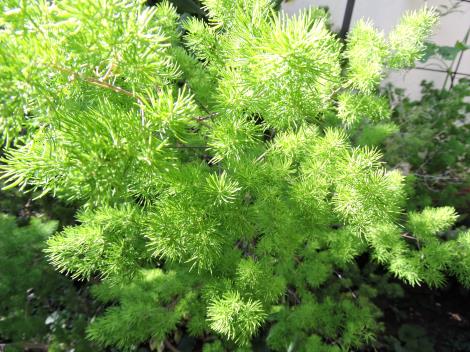
Asparagus macowanii in my garden
.jpg)
Holmskoldia sanguinea
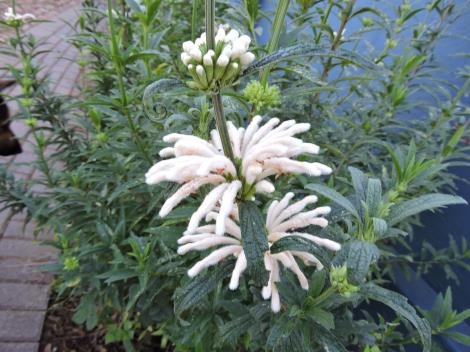
Leonotus leonorus alba
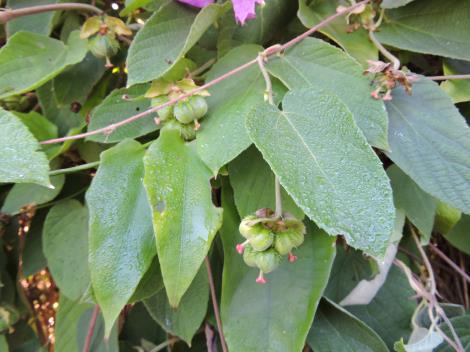
Dalechampia seeds
IN THE NURSERY
Click here to view all the plants in this newsletter on one website page.
Indigenous plants
Indigenous to the Western and Eastern Cape, the spring-flowering Salvia aurea is happiest in a sunny position with dry sandy soil. The attractive flowers, golden-yellow fading to brown, attract birds, moths and bees. It grows on average 2m high.
The velvety white flowers of Leonotis leonorus alba attract birds, bees and butterflies from summer to autumn. This showy, very hardy, approximately 2m high shrub wants full sun. A good cut flower.
A threatened and rare shrub, the stunning, clump forming Asparagus macowanii has tall canes with dense fluffy tufts of wiry green leaves, and sprays of fragrant white flowers in summer. It is evergreen and hardy, grows on average 1m high, and likes shade to semi-shade.
The African dog rose, Xylotheca kraussiana, is a multi-stemmed, smooth-barked, approximately 2m high tree/shrub with velvety, dark green leaves and large scented white flowers in summer. Hailing from the Eastern Cape and KwaZulu-Natal, this hardy, evergreen plant wants semi-shade.
Exotic plants
The spring-flowering Cistus x corbariensis is a well-shaped bushy evergreen shrub with oval crinkled leaves and white flowers with yellow stamens. It grows on average 1m high, and flowers. Hailing from the Mediterranean, it wants full sun and dry sandy soil.
Echium candicans is another plant to consider for a sunny, dry and sandy position. A rounded approximately 1.8m high shrub which is hardy up to -3 degrees Celsius, it has woody stems with hairy silvery leaves, and panicles of vibrant blue flowers from spring to summer. We have plants in 18cm pots.
Dahlia imperialis – the gorgeous tree dahlia – is a fast-growing deciduous perennial with bamboo-like stems and orange-centred lilac flowers that attract bees and butterflies in winter. This hardy plant can reach an impressive height of 4m.
Maurandya Bridal bouquet is a gorgeous fast-growing woody-based climber with triangular hairy leaves and large ivory white trumpet shaped flowers from summer to autumn. Evergreen and hardy, it grows on average 2m high, and is happy in sun to semi-shade.
FUN FACT
Science caught up with centuries of wisdom in the 1990s and early 2000s, when studies confirmed the benefits of cover crops for soil fertility and erosion prevention. Since then, there has also been a proliferation of research on advantages such as moisture management, carbon sequestration, and pest control.
Happy gardening!
Leoné
082 482 0257